Case studies · A grammar of positing
IMPACT4GRAMMAR
A toy in the best sense – and a radical attempt to make visual decisions visible.
What it is
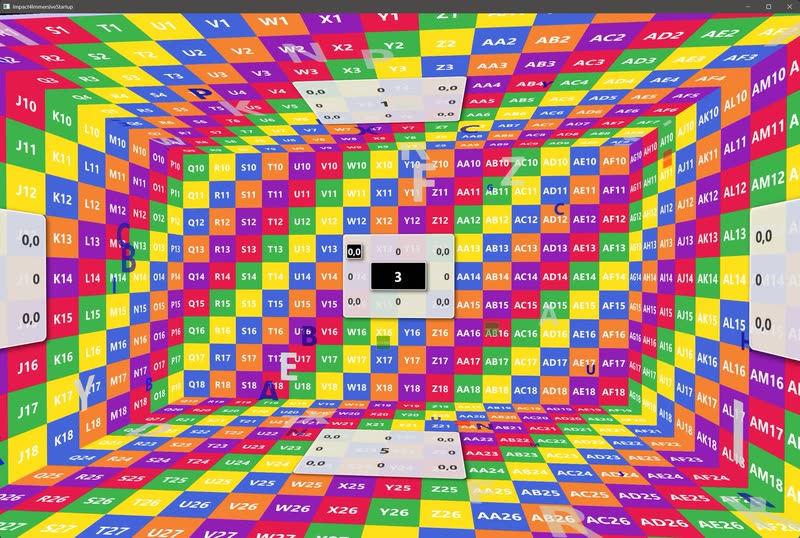
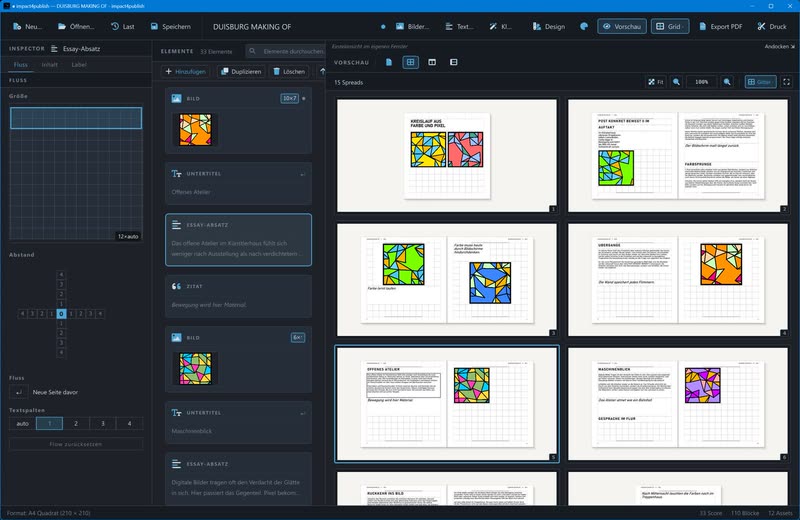
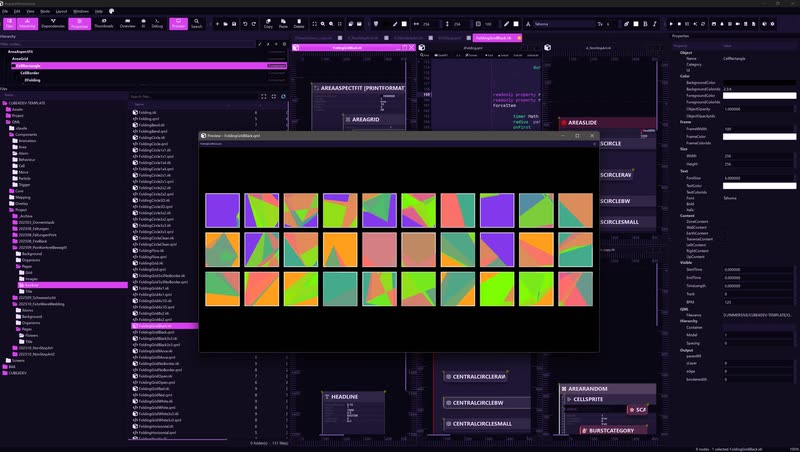
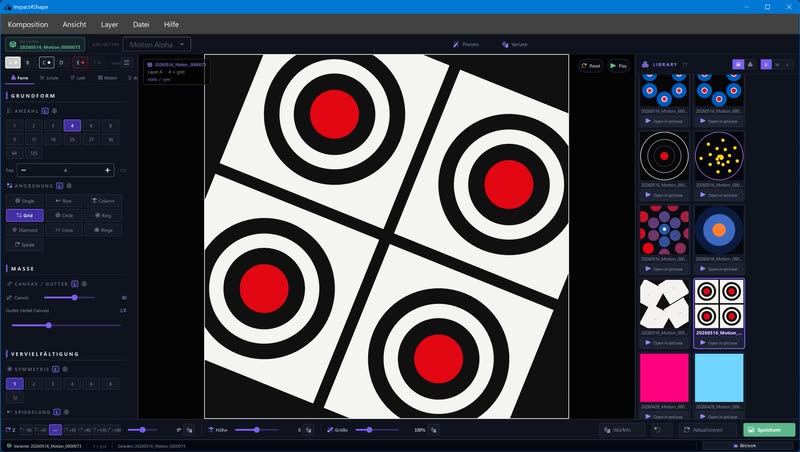
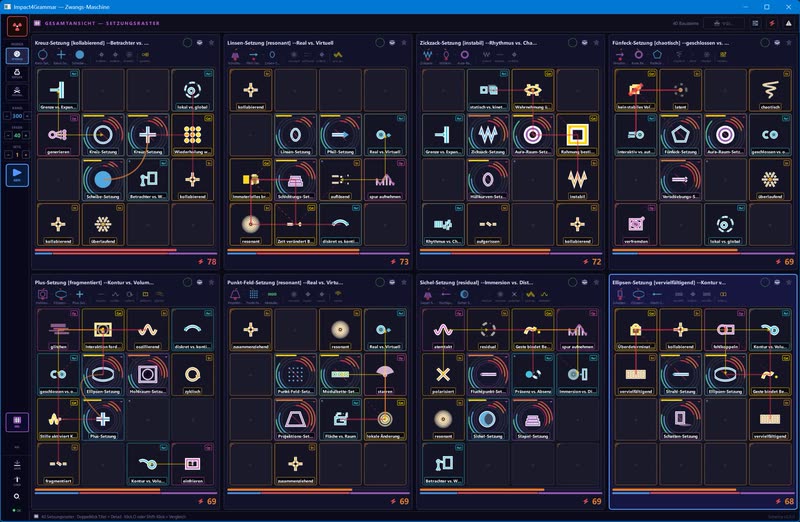
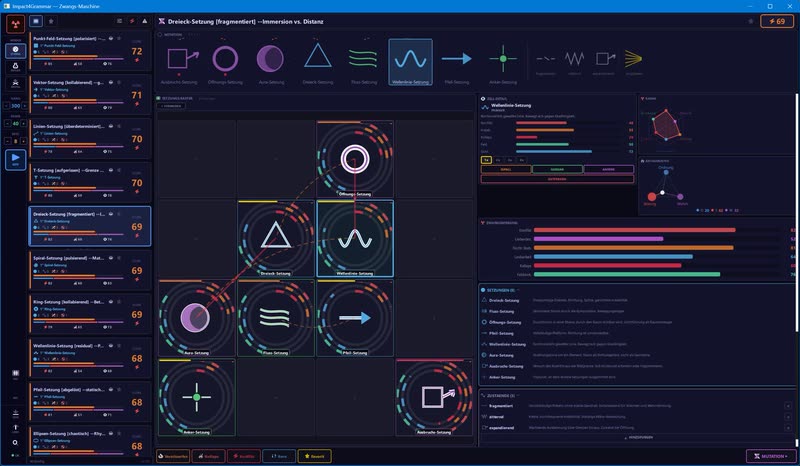
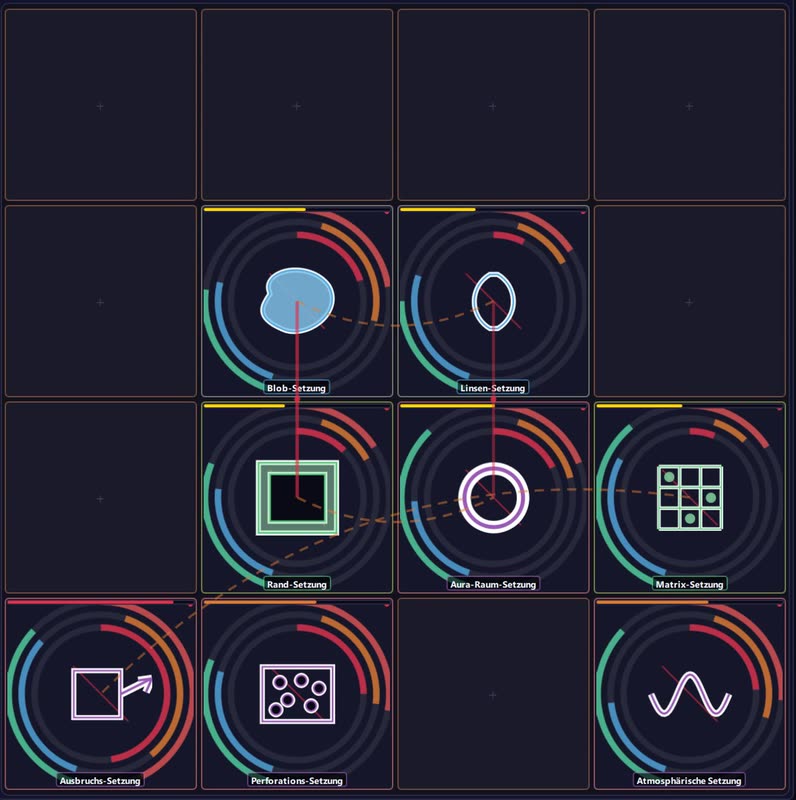
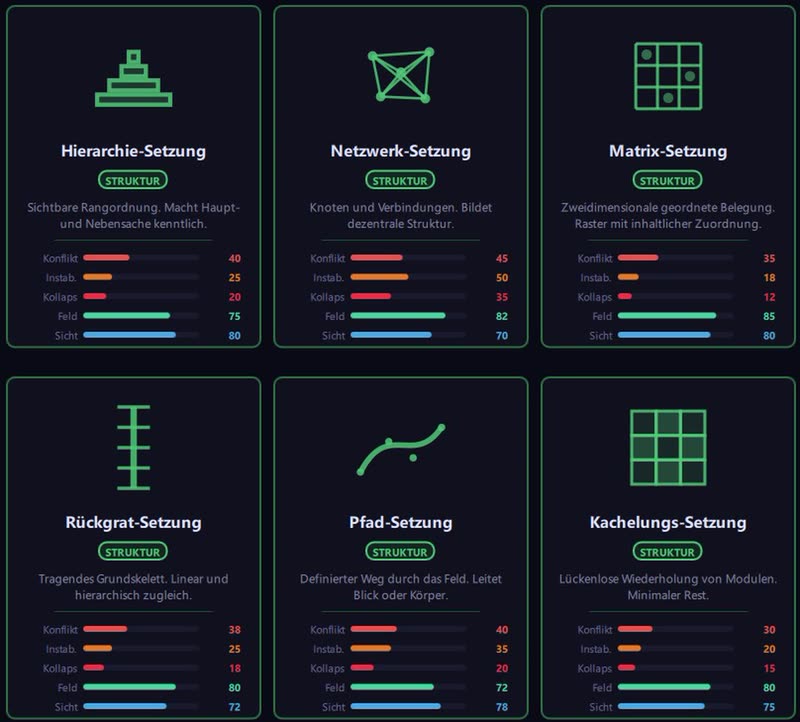
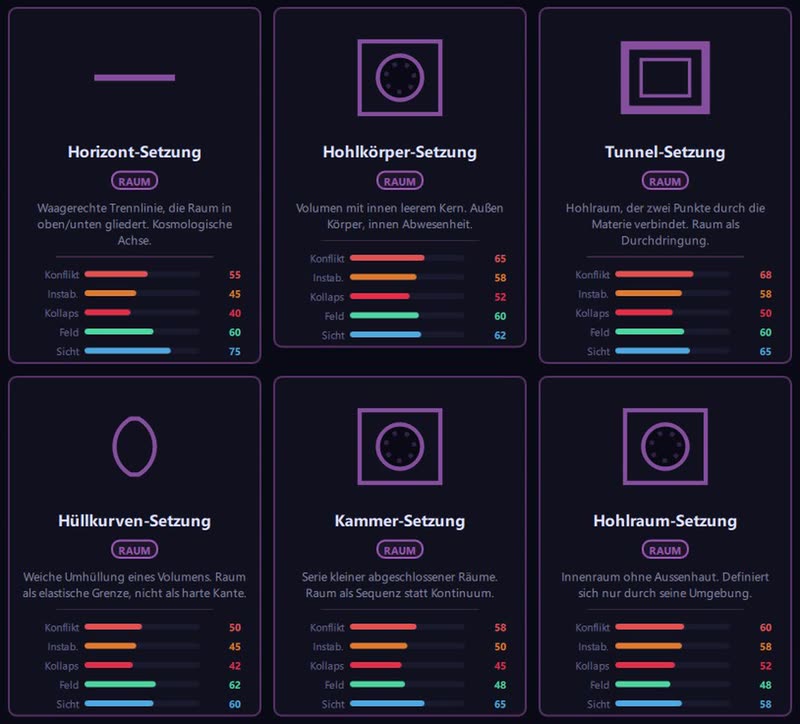
Impact4Grammar examines compositions: a catalogue of positings – point, line, grid, layering – organised in a 4×4 grid, with metrics for conflict strength, complexity, stability, field effect and legibility.
The spark
“Art is positing” – a sentence from an art teacher, almost 40 years old. Impact4Grammar asks what happens if you take it literally: at the centre is not the finished image, but the smallest decision from which it arises.
What was built with AI
Built with AI:
- a catalogue of positings in three areas: primary, structural and spatial positings
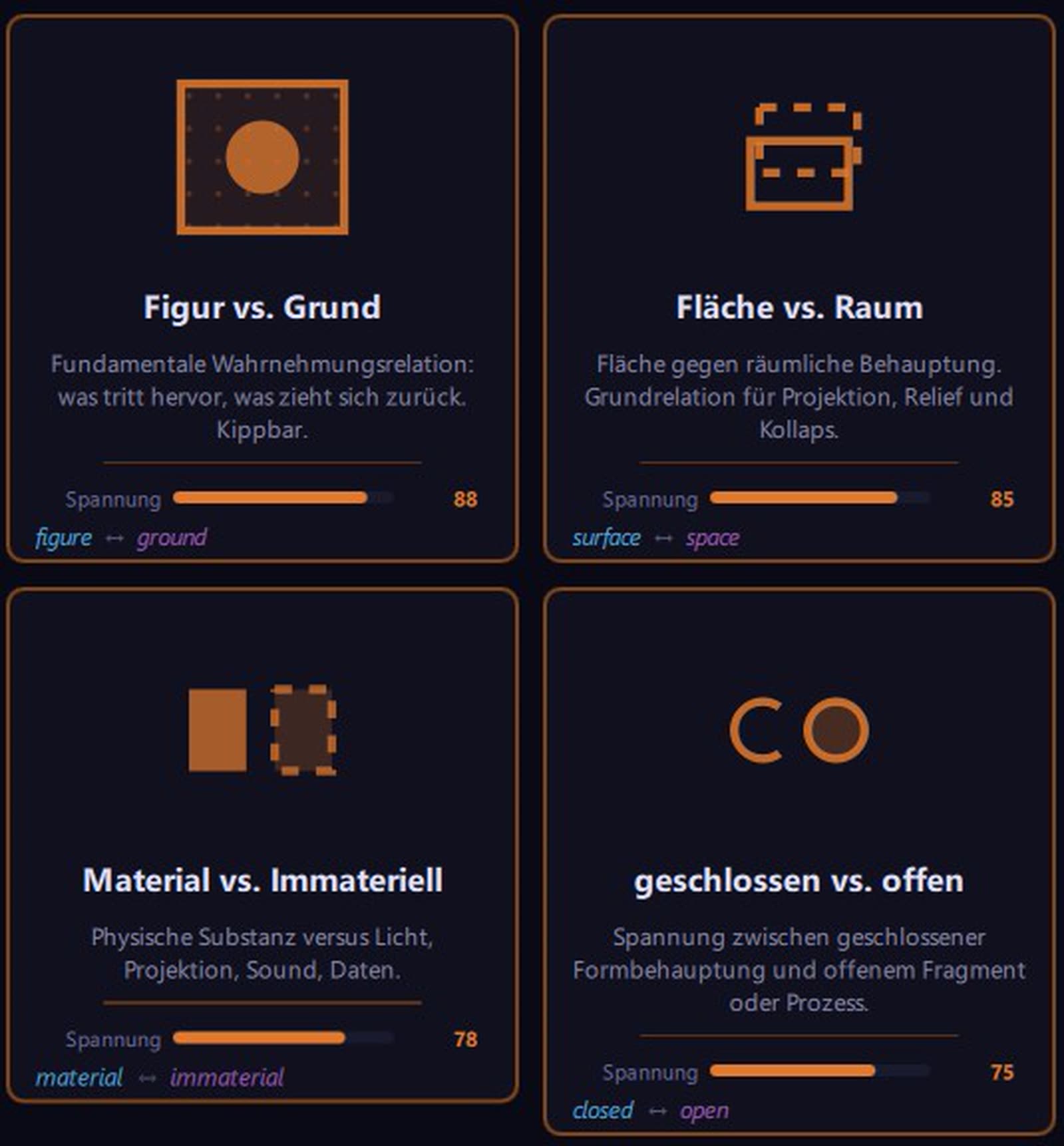
- states and relationships – stable, fragmented, dynamic, open versus closed
- the forcing effect: how strongly a positing steers the eye
- three modes: Strict, Exploration and Brutality
- metrics for comparing variants

What only experience decides
The metrics are orientation, not judgement – that is what the product says, and that is the real decision.
Software that grades art would be quickly built and wrong. Software that makes decisions visible and lets you play needs someone who knows where measurability ends.
Theses on film
-
Case study · IMPACT4GRAMMAR →
“Art is positing.” -
An artist in product development →
Building context, thinking around corners, seeing connections no one has seen before. -
Creativity is the engine →
They say: humans decide, AI develops. -
The software market is upside down →
The software market is upside down.
What a company gains
Design rules for a brand identity, variants of a product design, user interfaces: wherever design is decided in a team, a shared language for positings helps – instead of “I like it” and “I don't like it”.