Case studies · Playable mining model
Minimal Mine
Beneath every colliery lies a city: six controls, and the bottleneck lights up.
What it is
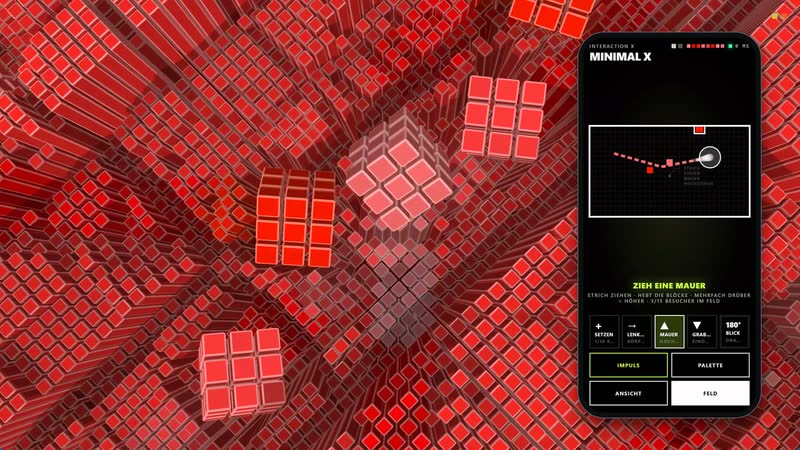
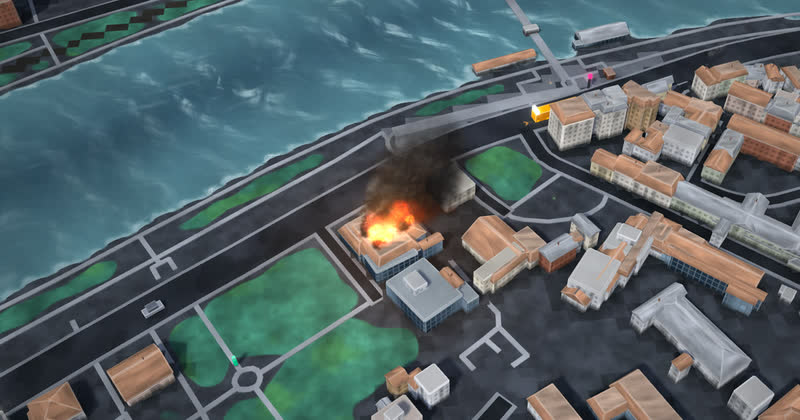
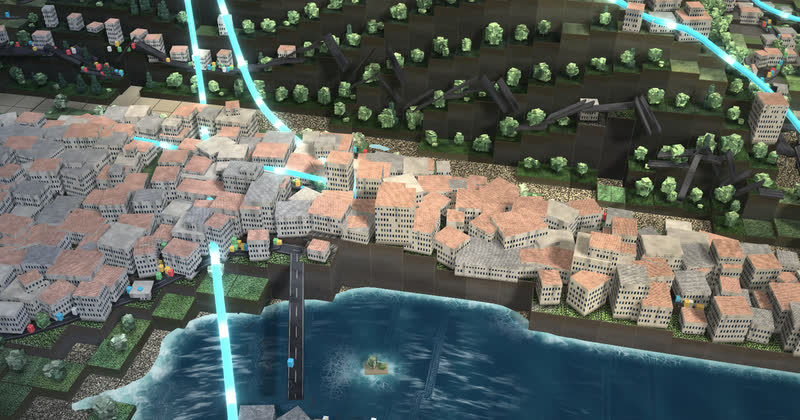
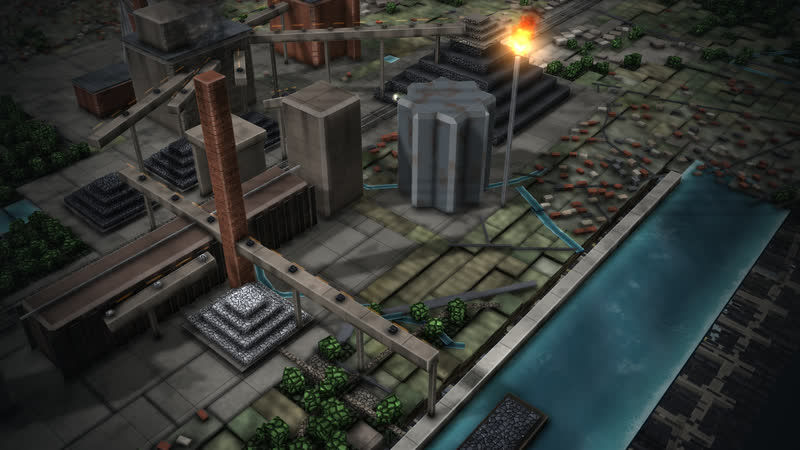
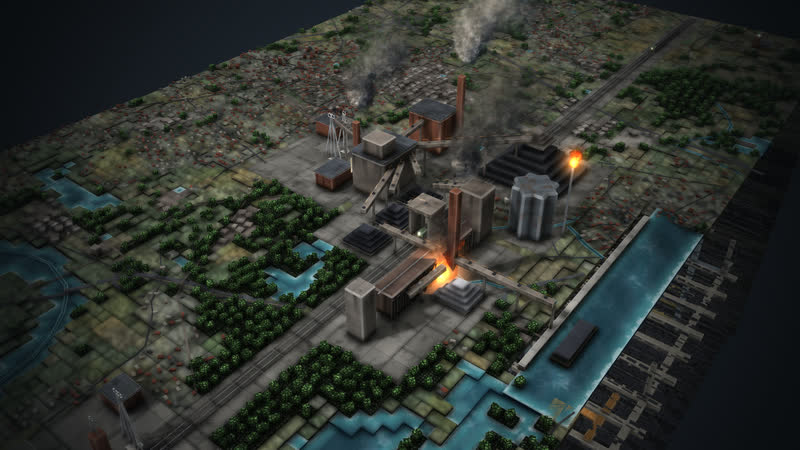
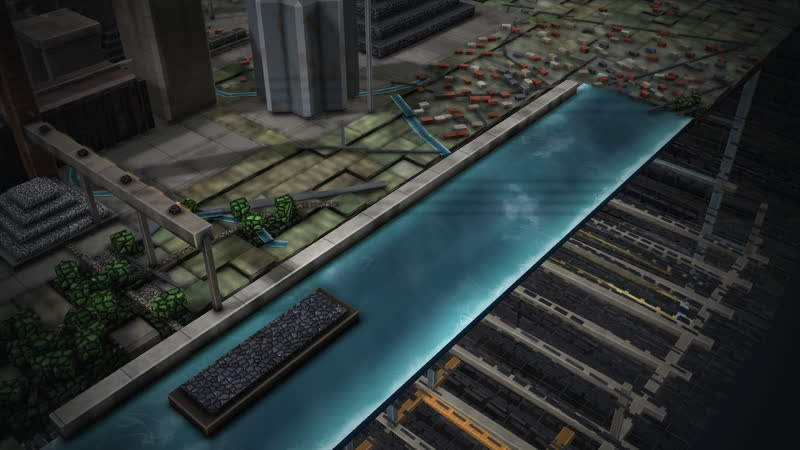
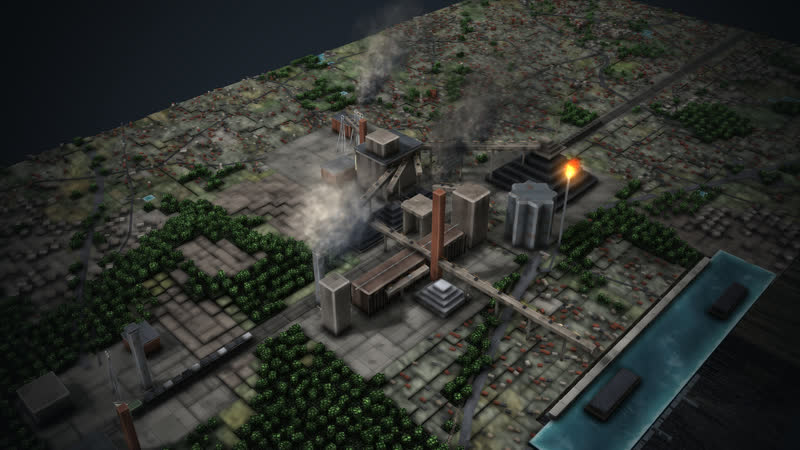
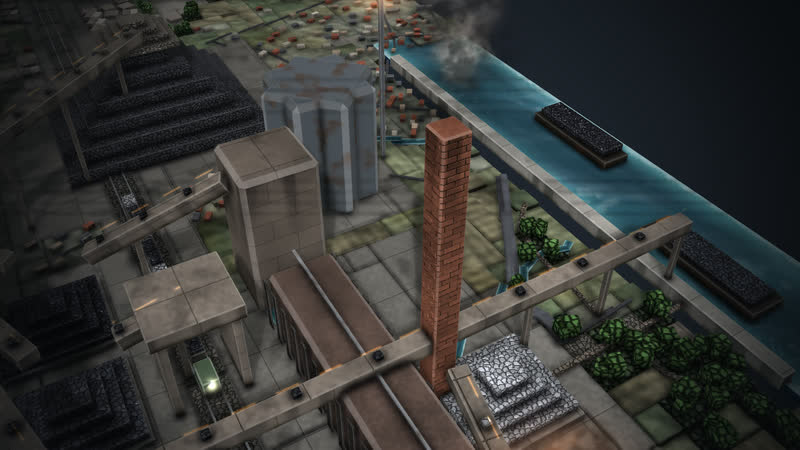
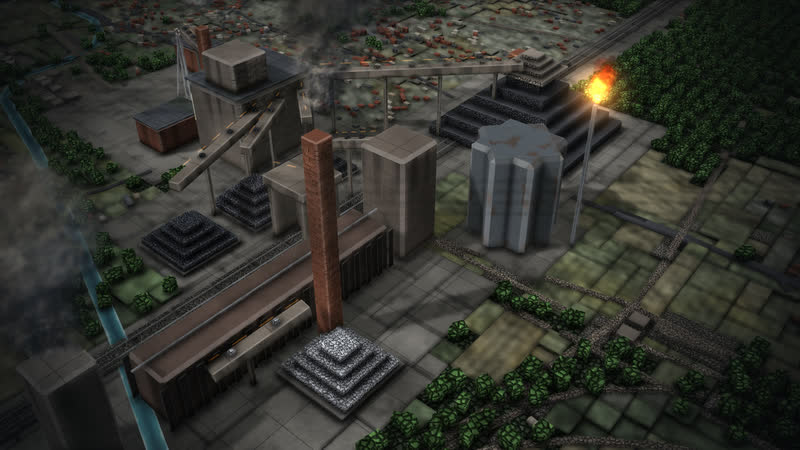
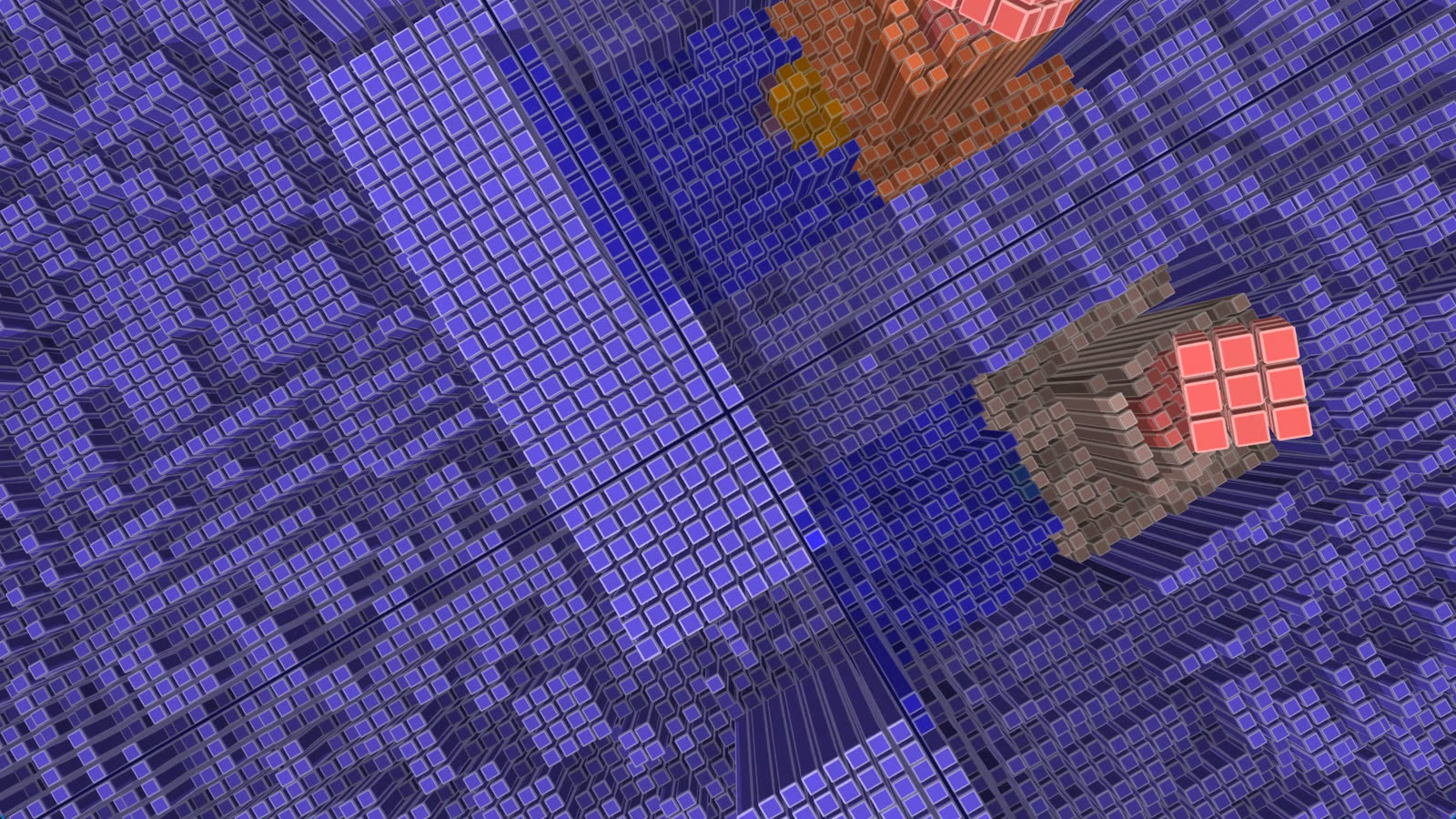
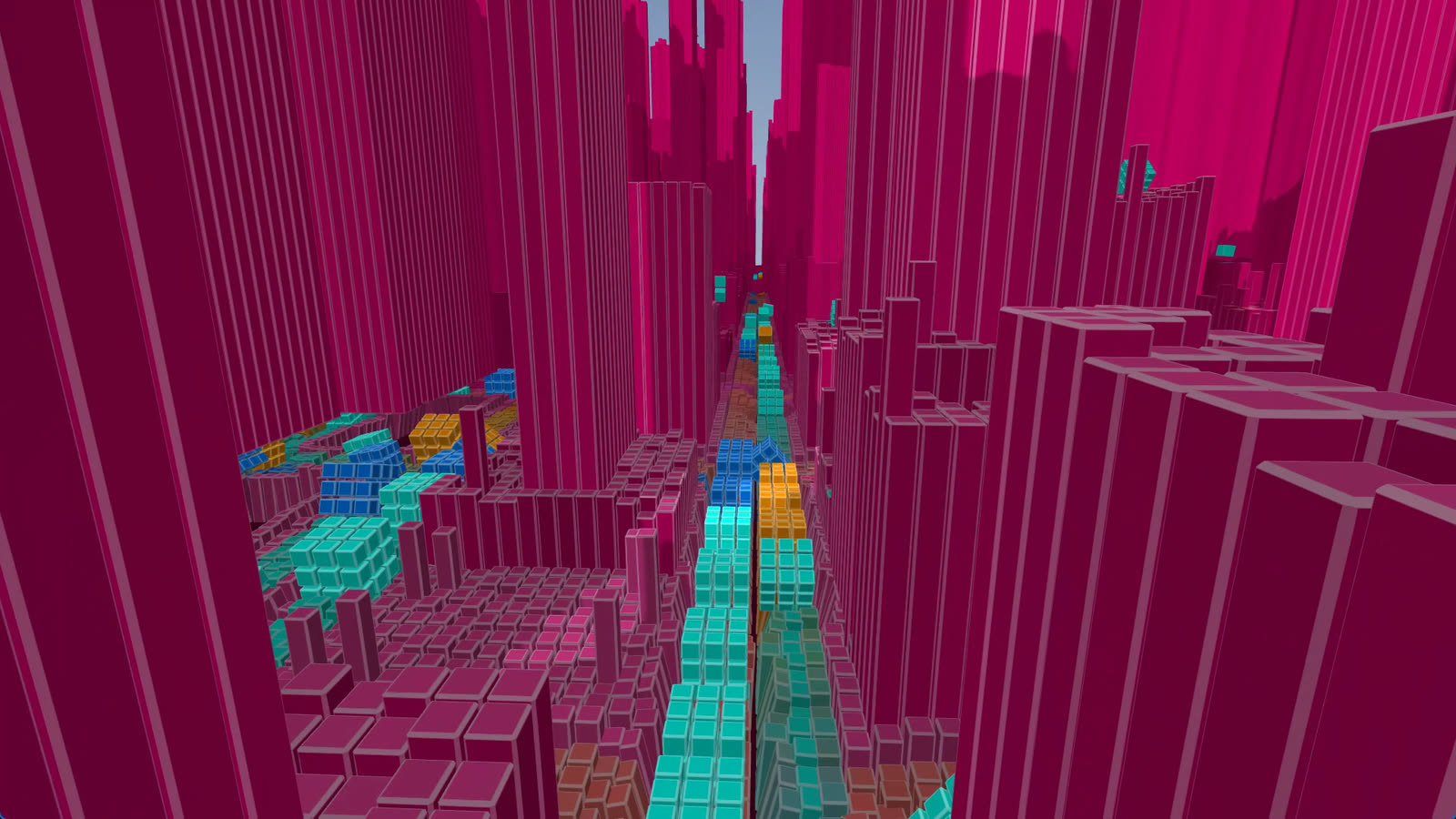
Minimal Mine shows the Ruhr around 1957 in blocks: 90 collieries on the map, 21 researched, each with its city of levels, shafts and roadways. Six controls set the operation; on the surface runs the colliery railway. Playable preview of a museum installation in the browser, with model values.
The spark
Industrial heritage shows a headframe on the surface. The real thing lay beneath it: levels, shafts and roadways where trains shuttled and miners worked.
The question was how to cut this city open so that people can look inside. The blocks for it come from art, from the Minimal series.
What was built with AI
Built with AI, in a short time, in-house:
- 21 researched collieries: levels at their depths, shafts by purpose, seams, major faults, links to neighbouring collieries
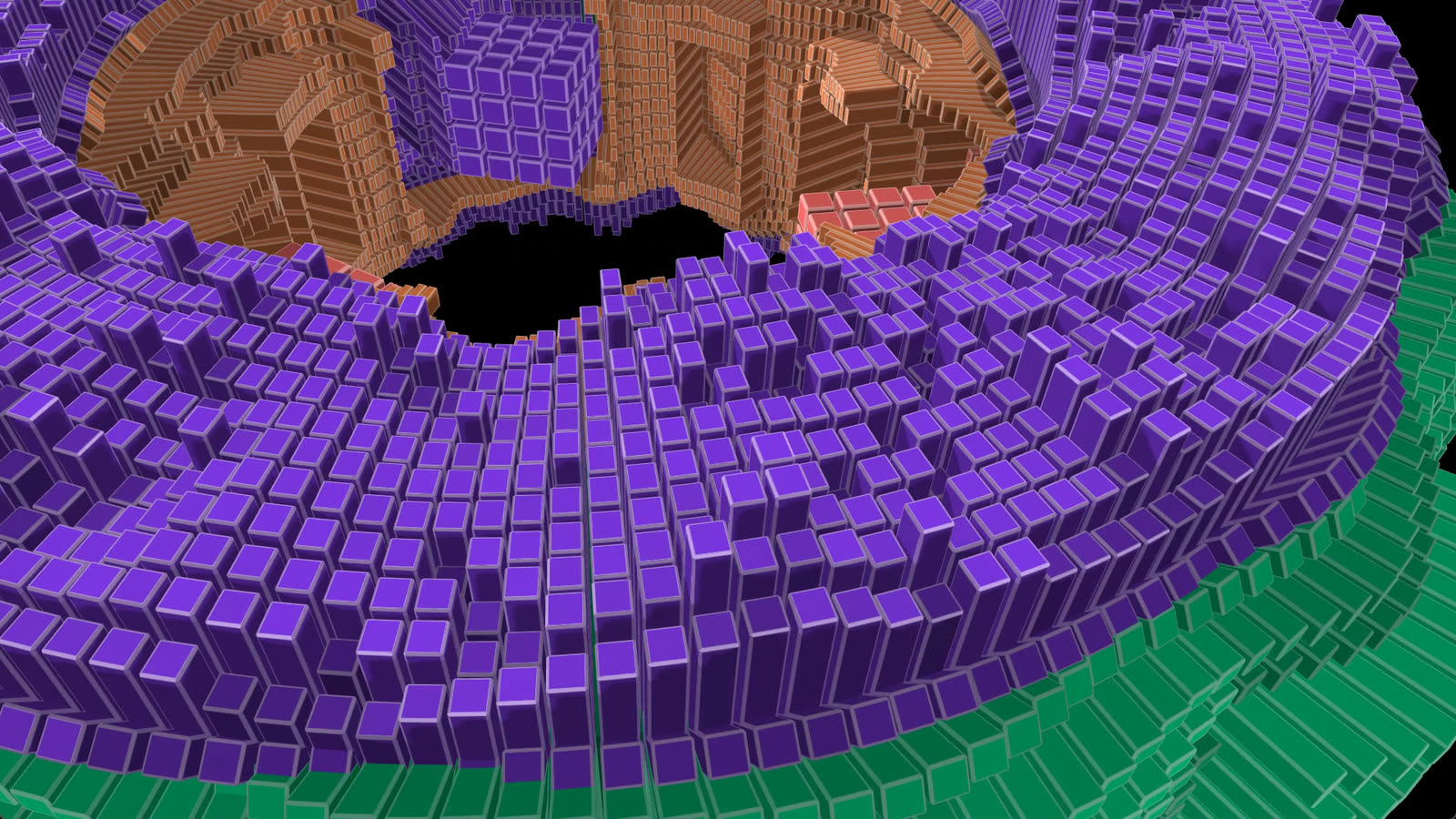
- a section through the mountain: a box opens at the main shaft, its walls show seams and sandstone as folded bands
- six controls, calculated from the colliery’s data and calibrated to output and workforce, as model values
- the path of the coal from the longwall via trains and shaft to washery, heaps, colliery railway and coking plant
- layers for levels, longwalls, coal, air and water; fans, trains and pumps sound where they stand
- a nine-step task in a fictional model colliery and a self-running mode for museum stations
What only experience decides
Documented and estimated stay apart: the 21 researched collieries carry a golden edge, the others the tag “partly estimated”, and the task takes place in an expressly fictional model colliery.
And nobody is left alone with six controls: the bottleneck lights up, one sentence sums up the situation, supply comes first, then the path of the coal. No AI suggests this order by itself. It comes from someone who has watched people in front of his installations.
Theses on film
-
Case study · IMPACT4PAINT →
The hand sets the impulse. -
Case study · Impact4Exhibition →
An AI builds every feature you describe to it. -
Case study · IMPACT4IMMERSIVE Runtime →
Five projectors, one room, sensors, continuous operation. -
Case study · IMPACT4IMMERSIVE IDE →
AI plays two parts: as a method of development and as a function in the product. -
Case study · IMPACT4PAINT →
The movements of FLACHER RAUM were painted in software of my own.
From tool to work
What a company gains
What cannot be seen from outside, shafts, pipes, networks, becomes visible: for training, visitor centres and customer centres. Spotting a bottleneck, intervening, seeing the effect can be practised safely and as often as needed.
The basic example can be tried at once, in the browser, without installation. In the same way we build versions for companies, museums and training centres: their own content, also as a shared table or projection wall. A model for experience and training, not a certified safety instruction.